The European Union has adopted the digital euro. The debate is now behind us.
But in my view, this decision does not address the real challenge.
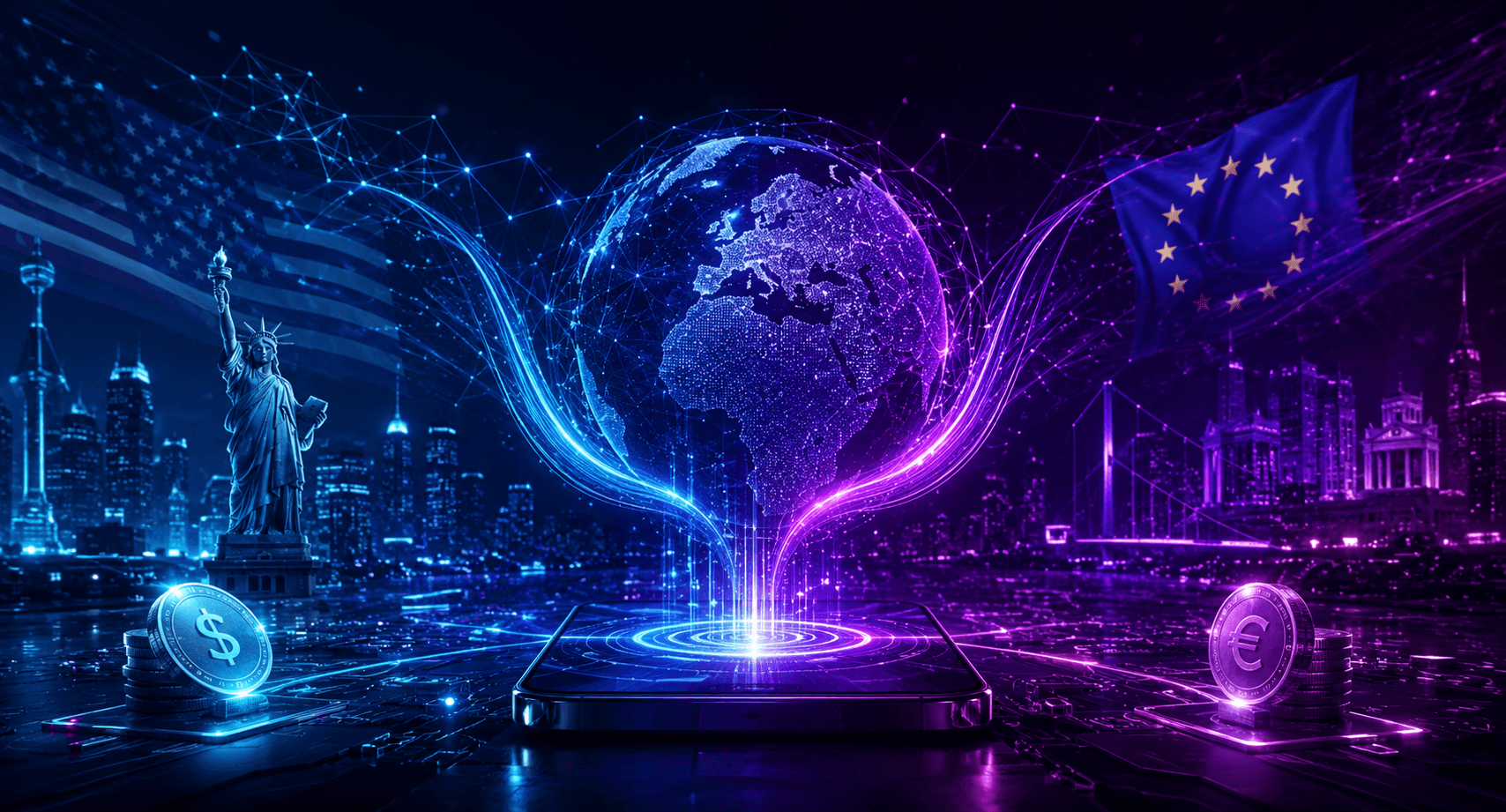
While Europe builds a public digital currency, the United States has already won much of the battle thanks to its private companies.
Web3 today essentially speaks in dollars.
USDT.
USDC.
And tomorrow, likely more American stablecoins.
Every time a European user trades, saves, or pays with a dollar stablecoin, they mechanically increase global demand for the American currency.
This demand underpins the dollar's place in the global economy and indirectly contributes to the United States' ability to finance a public debt that has become colossal.
In other words, part of American monetary power now spreads through the private infrastructure of Web3.
Meanwhile, Europe is following a very different path.
Our states continue to accumulate deficits.
French debt now exceeds 3,500 billion euros.
The entire eurozone also carries a considerable debt, even as the euro remains very little used in the global crypto economy.
We are therefore facing two difficulties stacked on top of each other.
We have to finance our own debt.
And we use, more every day, digital infrastructure that indirectly reinforces the dollar's economic dominance.
A battle that goes beyond currency
For a European user, the consequences are far from trivial.
Tomorrow, a growing share of international digital payments could continue to be made in dollars.
Major innovations are likely to be developed outside Europe.
Our data.
Our financial flows.
And part of our digital economy will depend ever more on foreign players.
The digital euro, on its own, will not change this reality.
A currency, even a digital one, only has strategic value when it is carried by a genuine ecosystem.
What Europe actually needs
What Europe needs is infrastructure.
European super-apps.
Widely used euro stablecoins.
European payment platforms.
Open protocols.
Companies capable of competing with American giants.
Monetary sovereignty is not only about creating a new form of money.
It is about mastering the networks through which that money circulates.
In the 21st century, whoever controls infrastructure controls part of the economy.
Sovereignty is also a question of civilisation
Beyond technology, this battle is profoundly human.
Our grandparents rebuilt a country.
Our parents passed on an ideal to us.
Liberty.
Equality.
Fraternity.
These three words must not remain engraved on the pediments of our town halls.
They must now live in the digital world.
The freedom to remain the owner of your assets.
The freedom to choose where your data circulates.
The equality of accessing the same services, wherever you live.
The fraternity of building together infrastructure that serves citizens before the interests of a few global platforms.
For decades, Europe has watched the great revolutions pass it by.
The internet.
Social networks.
The cloud.
Smartphones.
Artificial intelligence.
Blockchain.
Each time, the giants were built elsewhere.
But this time, nothing is yet written.
We can still choose to build.
We can still choose to innovate.
We can still choose to become a land of entrepreneurs, engineers, and builders again.
The vision carried by OZAPAY
At OZAPAY, we believe the next revolution will not simply be that of artificial intelligence.
It will be that of the infrastructure connecting individuals, businesses, and states.
Our ambition is to build a next-generation European infrastructure.
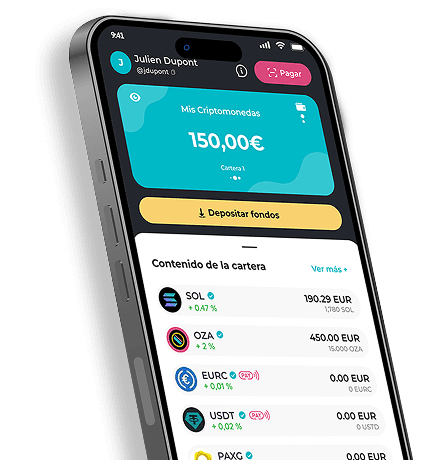
A self-custodial super-app.
Where everyone remains the owner of their assets.
Of their digital identity.
Of their exchanges.
Because tomorrow, wealth will no longer be measured solely by the currency we use.
It will depend above all on whoever controls the digital infrastructure through which that currency circulates.
Building rather than enduring
The digital euro is not an end.
It may be the beginning of a new stage.
But without innovative companies, without European infrastructure, and without mass adoption, it will remain just one tool among others.
True sovereignty is not imposed by decree.
It is built.
It is invested in.
It is undertaken.
The 21st century will not only be that of artificial intelligence.
It will be that of digital sovereignty.
And this revolution belongs to neither states.
Nor banks.
Nor tech giants.
It belongs to those who will have the courage to build.
For us.
For our children.
And for all the generations that will follow.
Freedom is not decreed. It is built.