Declined payments, impossible transfers and potentially millions of users affected. This Tuesday, October 20, 2026, the incident hitting Revolut is a reminder of an often-forgotten reality: having money in an account doesn't always mean being able to use it. What if it were time to rethink our relationship with financial services?
- Revolut paralyzed: when a simple outage becomes a daily problem
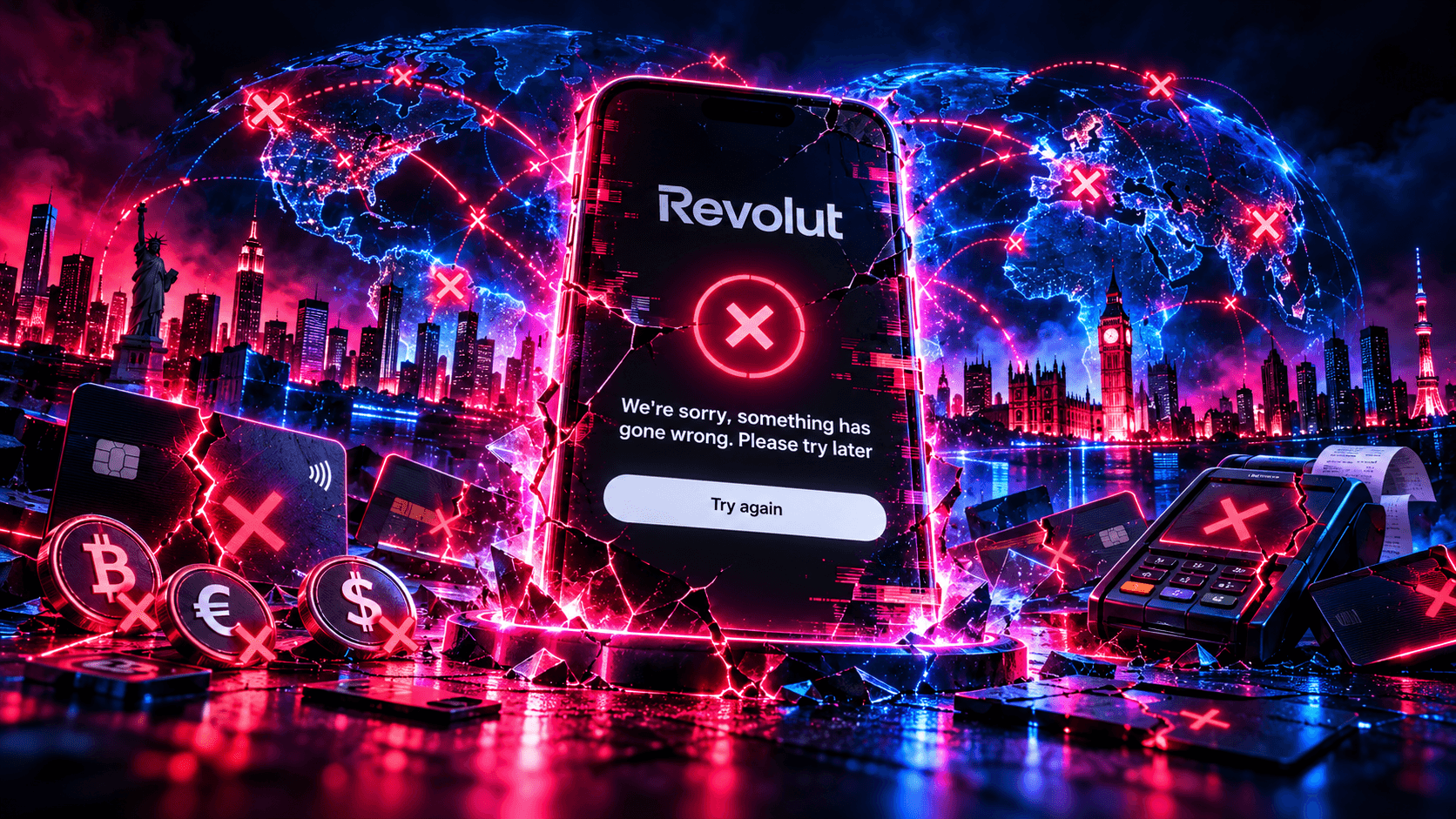
This Tuesday, October 20, 2026, many Revolut users found themselves in a particularly uncomfortable situation: being unable to carry out certain essential banking operations.
From the morning onwards, several services were disrupted:
- Card payments, including physical cards.
- Withdrawals from ATMs.
- Transfers and money remittances.
- Access to the app and accounts.
- Certain cryptocurrency operations.
- Customer support via messaging.
The situation extends beyond French borders and also affects several other European countries. Revolut has acknowledged the incident and assured that its customers' funds and data remained secure.
MoneyVox
+2
But one question remains: what's the point of perfectly secure money if its owner can temporarily no longer use it?
Imagine for a moment: you're abroad, you need to pay for your hotel, buy a train ticket or simply settle your groceries.
Your account is funded. Your card is active. You've made no mistake.
Yet the payment is declined.
This highlights the fragility of an exclusive dependence on a single financial system.
2. Google Cloud: when an infrastructure issue affects multiple financial institutions
Available information points to the source of the disruptions being an incident on Google Cloud's infrastructure, notably in its London region.
Several financial institutions and digital services were affected, illustrating the sometimes invisible concentration of critical technology infrastructure.
AP News
+2
This situation raises a question that goes far beyond Revolut.
Today, financial institutions may display very different brands, interfaces and offerings, while sometimes relying on the same technology providers.
When a major link in this chain encounters a problem, the consequences can spread to many services simultaneously.
This is the paradox of modern finance: we have ever more powerful applications, yet the availability of our money remains dependent on systems we don't control.
A modern financial app shouldn't only be simple and fast. It should also enable its users to better master their assets and dependencies.
3. Your money, your keys: another philosophy is becoming possible
For decades, we've grown accustomed to entrusting our funds to intermediaries.
This arrangement has considerable advantages: operational security, banking services, regulatory protection and ease of transactions.
But it also implies a dependence.
With the emergence of blockchain and Web3, another approach has developed: self-custody.
The principle is simple.
Instead of systematically handing over control of one's digital assets to a centralized platform, the user can have their own wallet and personally keep their private keys.
This profoundly changes the relationship between the individual and their assets.
Blockchain notably enables transfers directly between wallets, without requiring assets to be held by a traditional banking institution.
Naturally, this independence comes with new responsibilities. Protecting private keys becomes essential, transactions can be irreversible, and blockchain networks themselves can experience disruptions.
But one thing fundamentally changes: control over one's digital assets no longer necessarily relies on an account held by a single intermediary.
This is precisely the philosophy we champion at OZAPAY.
4. OZAPAY: a French Super App built around your financial freedom
DISCOVER OZAPAY
At OZAPAY, we believe the future of financial services shouldn't pit traditional banking systems against new technologies.
It should enable users to benefit from the best of both worlds.
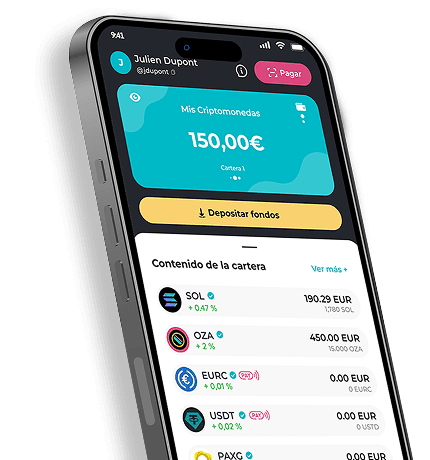
Our ambition is to build a French Super App that brings payments, digital assets and everyday financial services together within a single environment.
Our fundamental difference? Self-custody.
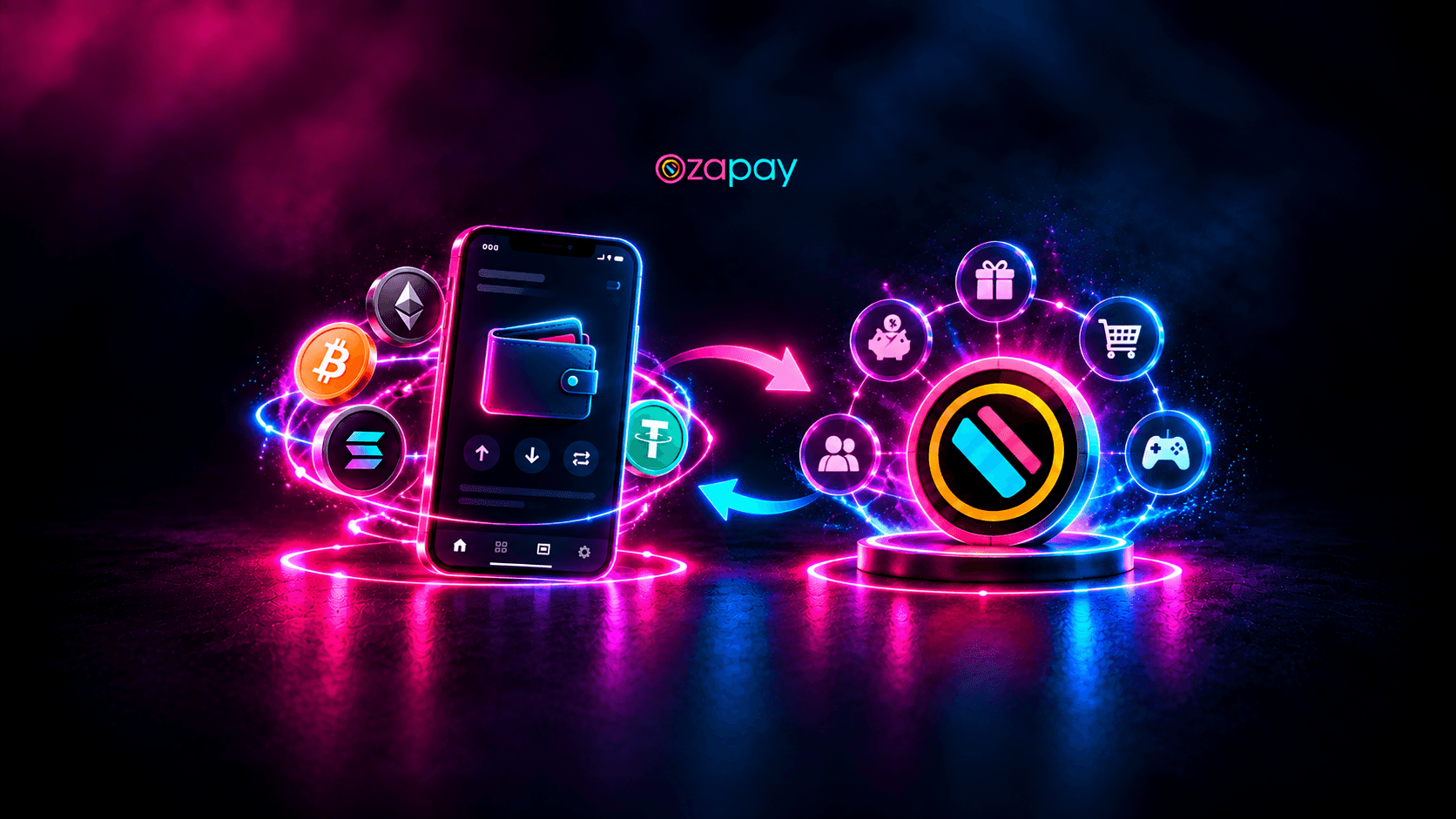
With OZAPAY, you can create your own digital wallet and personally keep your secret phrase and private keys.
Your digital assets are therefore not simply recorded in the internal accounts of a platform that holds them for you.
They are tied to your wallet on the blockchain.
OZAPAY is also developing an ecosystem of services designed to make digital assets easier to use on a daily basis, with existing features and others currently being rolled out.
Our vision rests on three convictions:
Freedom: everyone should be able to exercise direct control over their digital assets.
Simplicity: blockchain technologies must become accessible to as many people as possible, without requiring technical expertise.
Openness: traditional financial services and decentralized technologies can complement each other rather than exclude each other.
This approach doesn't mean that all OZAPAY services would automatically work in the event of a banking or IT outage. Traditional currency payments, conversions and certain features notably rely on partners.
However, self-custody brings a major structural difference when it comes to holding digital assets.
5. This isn't about replacing one dependence with another
The real lesson of this incident isn't that we should abandon Revolut or traditional banks.
It's that diversifying one's payment methods and storage solutions is becoming relevant.
Today, it's possible to combine several approaches: keep a traditional bank account for everyday transactions, have an alternative solution for payments, and use a self-custody wallet for digital assets.
This diversification doesn't eliminate risk. On the other hand, it avoids concentrating all your usage on a single intermediary.
It's an evolution comparable to what we experienced with the Internet: users now seek more choice, mobility and control.
And finance is no exception.
6. What if you discovered OZAPAY today?
You don't have to wait for the next banking outage to discover new financial solutions.
At OZAPAY, we want to make the Web3 universe more accessible, with an app designed to support both beginners and experienced users.
Creating an OZAPAY account notably means being able to:
- Discover a French Super App focused on next-generation finance.
- Create a personal digital wallet in self-custody.
- Explore digital assets and available features.
- Take part in learning quests to better understand our ecosystem.
- Gradually discover the new services and features we're developing.
Sign-up is free and lets you start exploring the app with no obligation to invest.
What if you took back control of your digital assets?
Discover a different way to approach financial services with a French Super App designed for the new generation.OZAPAY — Finance, differently.
Discover OZAPAY
Conclusion: the next financial revolution will also be one of control
The Revolut outage of October 20, 2026 will eventually be resolved.
Apps will become accessible again. Cards will work once more. Transactions will resume their course.
But the questions raised by this incident deserve to linger.
Why have we become so dependent on a few infrastructures to use our money?
Why is direct control over our digital assets still so uncommon?
And above all, how can we build a finance capable of combining simplicity, protection and individual freedom?
At OZAPAY, we believe part of the answer lies in the complementarity between traditional finance and decentralized technologies.
Real financial innovation isn't just about changing the way we pay. It's also about changing the way we control our assets.
And this shift is already underway.
OZAPAY — Payments without borders. More opportunities.